
West Haven Address-History Sources by Era
Begin a previous residents search with the newest dependable source and work toward the target period. West Haven's online and local collections overlap, but their gaps differ. The table sets out confirmed coverage without implying that every year, address, or image survives.
| Source | Years It Covers | Where Held | What It Shows |
|---|---|---|---|
| SearchIQS land index | July 1, 1968 to present; images mainly since August 16, 1999 | West Haven City Clerk / SearchIQS | Recorded parties, dates, document type, book/page and instrument |
| Grantor/grantee index books | 1956 to 1968 | West Haven City Clerk | Bridge to owners before the online land-index start |
| Regional address sections | About the 1920s onward where included | New Haven Free Public Library | People or businesses listed at a street number |
| New Haven-area directories | 1840 to about 1990; strongest runs vary | NHFPL, WHPL, State Library and verified scans | Annual names, occupations, spouses and home addresses |
| Local newspapers, maps and manuscripts | Collection-specific; Historical Society cites material from 1700 onward | WHPL, Historical Society, State Library, New Haven Museum | Events, families, structures, businesses and neighborhood context |
For a recent transfer, start with the parcel and deed chain. For an early twentieth-century household, place annual directories beside deeds. For an older or broken trail, use archive guides, local papers, probate, maps, and period municipal names.
Start West Haven Previous-Resident Research at the Current Parcel
MapXpress accepts Owner/Co-Owner, House No, Street, and Parcel ID. Search the current address, then save the parcel identifier, situs, owner names, mailing address where shown, assessment or sale-history clues, and the date viewed. The parcel ID is more stable than a street form and helps distinguish adjacent lots or similarly numbered addresses.
Do not turn a tax owner into an occupant. The owner may be an estate, organization, co-owner, or person receiving mail elsewhere. A mailing address outside West Haven is a reason to investigate the deed, not proof of where anyone lived. This owner-versus-occupant rule governs the entire previous residents trail.
Walk the West Haven Deed Chain Backward
West Haven records deeds through the City Clerk, not a New Haven County recorder. Connecticut abolished county government in 1960, so a county label should not send a current land request to a nonexistent county office. SearchIQS provides the modern index route, with the clerk and index books filling earlier gaps.
- Use MapXpress to record today's owner, parcel ID, situs, and any legal-description or sale reference.
- Find that owner's acquisition deed in SearchIQS and save the grantor, grantee, recording date, document type, instrument, and book/page.
- Search the seller as a grantee to locate the earlier acquisition, checking name variants and both party roles.
- Repeat the transfer chain while comparing legal descriptions, map references, and parcel clues at each link.
- At the online cutoff, use the 1956 to 1968 grantor/grantee books, then ask the clerk or archive for older material.
- Grantor / grantee
- The grantor conveys an interest; the grantee receives it. Roles can vary with document type.
- Chain of title
- The linked sequence of recorded transfers and interests affecting the same property.
- Legal description
- The land description in a deed, often a safer historical match than a modern street number.
- Criss-cross directory
- An address-arranged directory used to find names from a street and number.
The 1956-to-1968 West Haven Index Bridge
The published SearchIQS coverage creates a useful bridge: grantor/grantee index books cover 1956 through 1968, and the land-record index begins July 1, 1968. Index and image coverage diverge for the later years, with images mainly available from August 16, 1999. An online name hit can therefore lead to a clerk-held book or image rather than deliver the deed itself.
SearchIQS generic help also advises removing the town filter when an older document fails because not every instrument is indexed to a town. Enter individual names surname first, test partial names or wildcard spelling, and use date, document group, description, book/page, or instrument fields to reduce noise. Address search is not guaranteed.
A West Haven Coverage Disagreement Worth Preserving
The SearchIQS help page says maps run from January 28, 1939 to the present, while its West Haven PDF index describes substantially later map-index and image periods. This is a genuine source conflict. It is not evidence that earlier maps never existed, nor should it be resolved by choosing the more convenient date.
Ask the City Clerk which map records are searchable now and whether the desired image requires an office request. The disagreement is a useful reminder for all previous residents work: a portal's coverage note describes the interface, not necessarily the full custody of the office.
Pair West Haven Directory Years with Household Records
Deeds establish owners and legal interests. Annual directories can reveal a named householder, spouse notation, occupation, business, work address, and home address. The address section in many regional directories from about the 1920s onward reverses the search so the street number comes first. It may omit other adults, children, or apartment occupants, so treat it as a snapshot rather than a census.
- Choose directory editions immediately before and after the target date, and log any missing year.
- Search the surname section and preserve initials, spouse or widow notation, occupation, “h” notation, and street spelling.
- Check the address section for the same number, nearby numbers, businesses, and a possible household-head change.
- Compare the nearest publicly available federal census household, allowing for old numbering and enumeration geography.
- Use newspapers, probate, death records, and maps to explain a transition without assuming its cause.
The collections and their entry conventions receive fuller treatment on the West Haven city directory page. Here they serve one address timeline.
West Haven Library Help Beyond the Online Index
West Haven Public Library's reference desk connects researchers to its Connecticut Collection, Amato Collection, genealogy tools, and local resources. Its public pages do not publish a year-by-year inventory of city directories, reverse directories, obituaries, or newspaper microfilm. A precise reference request should name the address, old spellings, people already found, target years, and whether a scan or citation is needed.
The library's research and genealogical resource index is shown in this captured page.
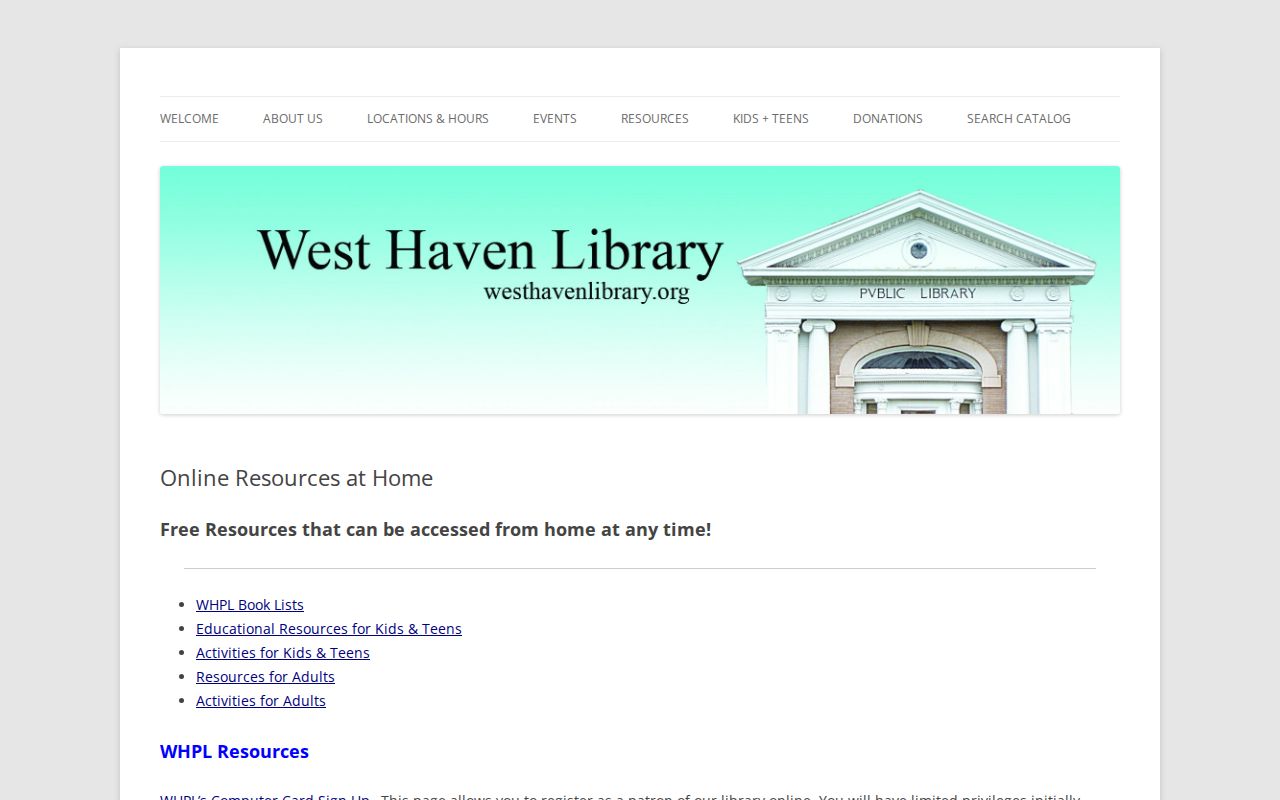
The page is an access path, not proof of a particular volume, so confirm the exact directory year or newspaper run with reference staff.
Guest computer access, low-cost copying, and free scanning can help when an online portal stops at an index. Those practical services make the reference desk a strong handoff from digital clues to shelf evidence.
A local report on West Haven library genealogy resources provides another view of that community research role.

The report adds local context, while the library's current pages and staff remain the authority for present access and holdings.
Use Connecticut Archives for Earlier West Haven Address History
The Connecticut State Library offers city-directory, census, probate, court, naturalization, old-house, and New Haven County research guides. Historical county material may route there even though modern West Haven deeds remain city records. Contact reference or archives staff with known names, dates, record types, jurisdictions, and citations instead of asking for an undefined search of everything.
The State Library's New Haven-area archives and house-history route is represented in the image below.
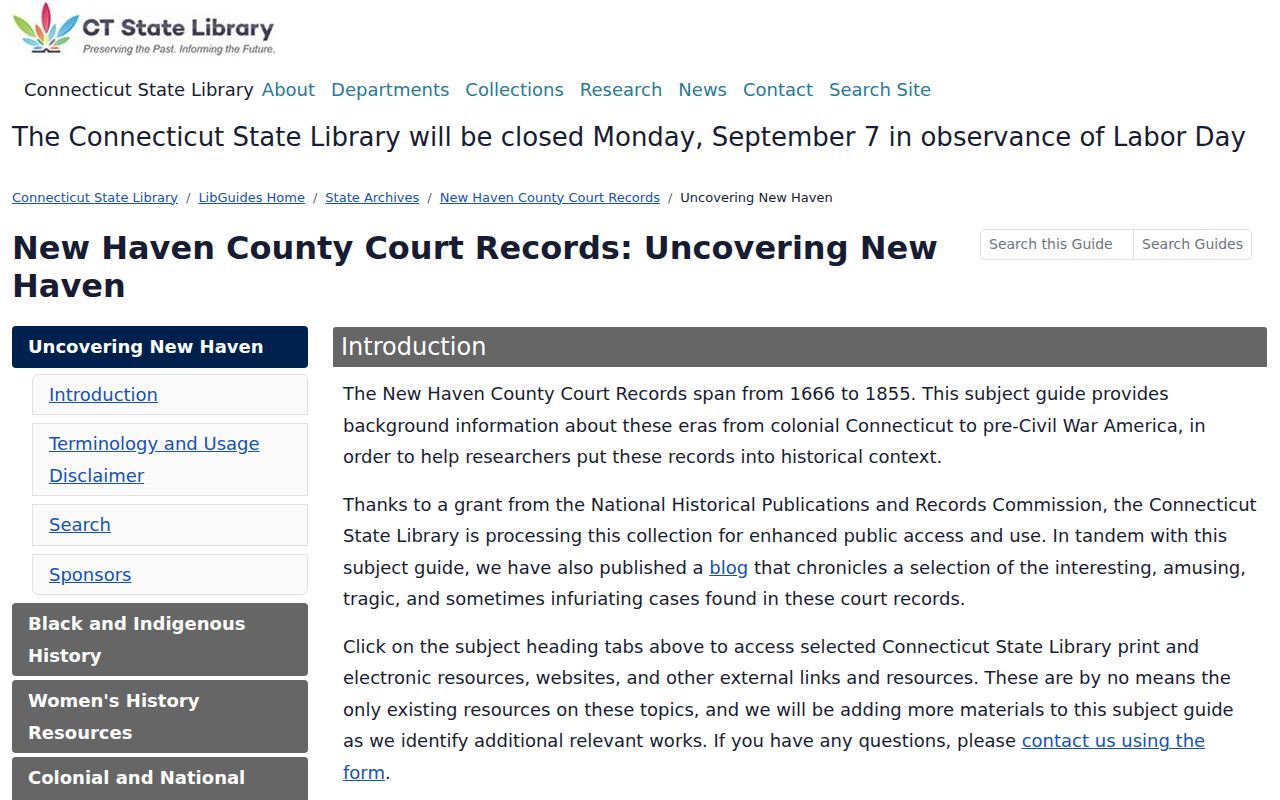
The guide helps identify archival record families; availability should still be confirmed because some material can require retrieval or staff assistance.
Search West Farms, Orange and New Haven for Past Residents
The same general place may carry different municipal labels across time. West Haven developed from West Farms within New Haven, became associated with Orange, became an independent town in 1921, and became a city in 1959. Older deeds, directories, newspapers, and family papers may use West Farms, Orange, New Haven, Allingtown, or West Haven.
Run the surname and street under each period label. Also test Savin Rock, trolley, beach, hotel, shoreline business, and local industry terms when the address trail intersects those settings. These are locally grounded search words, not proof that the person had a particular connection. Verify every match against the address and year.
Close a West Haven Previous-Residents Trail with Personal Records
Obituaries, probate files, cemetery clues, family manuscripts, and local newspapers can explain why a directory name disappears or a deed shifts to an estate. West Haven Historical Society describes nineteenth-century newspapers, maps, photographs, local papers, advertisements, artifacts, and information reaching from 1700 to the present. West Haven Public Library also has a citation-card history index to the West Haven Journal for October 1873 through 1877, though it is not a complete obituary index.
New Haven Museum's Whitney Library adds regional manuscripts, maps, newspapers, photographs, microfilm, and family collections by appointment. Its regional family-history finding aid is illustrated here.
A finding aid describes collection structure, so cite the specific folder or item ultimately consulted rather than treating the guide as the underlying fact.
What a Missing West Haven Year Really Means
A blank result can reflect an absent volume, an index-only period, an unavailable image, a changed spelling, a different municipality label, a household-head convention, or a street-number change. The research did not locate a complete official West Haven street-renumbering history or a local Sanborn collection page. Those gaps must remain gaps.
Compare editions on both sides of the year, browse nearby numbers in the reverse section, test the legal description and parcel history, and ask the Assessor, City Clerk, library, or Historical Society for the missing record class. Never invent a renumbering event to make two records fit.
Limits on Identifying West Haven Previous Residents
Even a well-built chain can establish only what the sources say. A deed names parties to a legal act, not all occupants. A directory may name one householder. Census access follows federal release rules and enumeration practice. Newspapers can repeat errors, and probate material may concern property without proving the decedent lived there.
Address confidentiality, voter privacy, sealed files, restricted vital records, and missing images create valid boundaries. Report those boundaries clearly. For a living person, minimize copied personal detail and use the record only for the lawful family, house-history, estate, or civic purpose that led to the search.
Lawful use. Previous-resident research supports house and family history; never use an address trail to track, harass, intimidate, or harm a living person.